Commercial Wine Fridges

16 products

Collection: Commercial Wine Fridges

Commercial wine fridges are built for environments where a domestic model simply wouldn't last. If you run a restaurant, bar, hotel, wine shop, or any hospitality business that needs to store and serve wine consistently under pressure, a commercial unit is the right investment. They're engineered for heavy daily use, faster cooling recovery when the door is opened frequently, and the kind of reliability that a busy service demands.

What makes a wine fridge commercial grade?

Commercial wine fridges differ from domestic models in several key ways. They use more powerful compressors that maintain set temperatures even when opened repeatedly throughout a service, rather than drifting upward every time the door swings open. They typically have stronger shelving rated for heavier, more frequent loading, and better-quality door seals rated for many thousands of open-and-close cycles rather than the few hundred a domestic unit is designed around. Many are also NSF or equivalent certified for food service hygiene, which matters if you're subject to environmental health inspection. Fan-assisted cooling (rather than passive convection) is more common in commercial models, helping maintain an even temperature throughout a fully loaded cabinet rather than leaving the top shelf noticeably warmer than the bottom.

Brands like Tefcold and Combisteel specialise in commercial refrigeration and offer wine-specific models designed for bar or restaurant counters, back-of-house storage, and cellar environments. These aren't domestic ranges repackaged for trade buyers — they're built from the ground up around continuous, heavy-use duty cycles.

Capacity and format

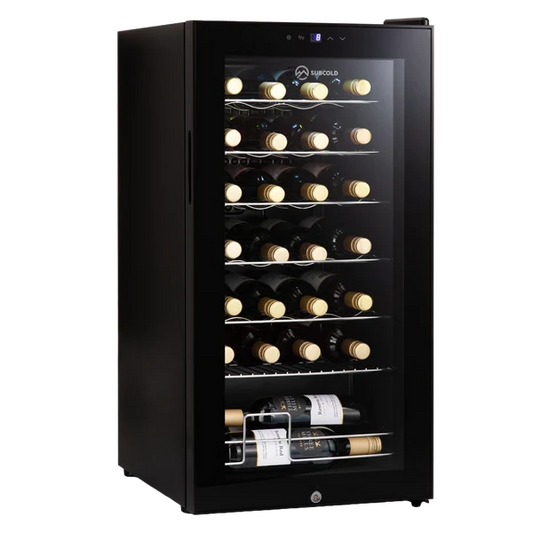
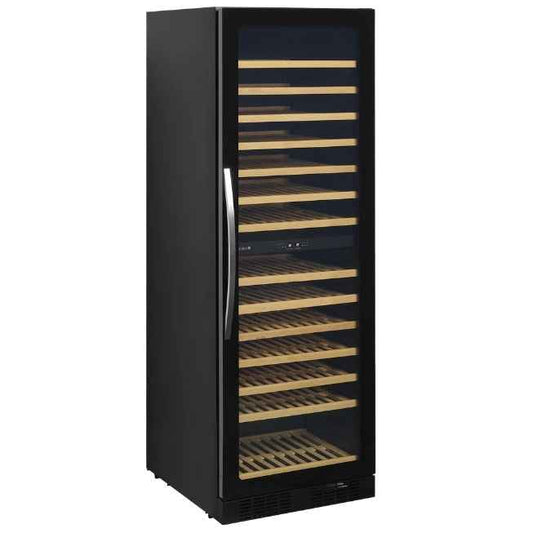
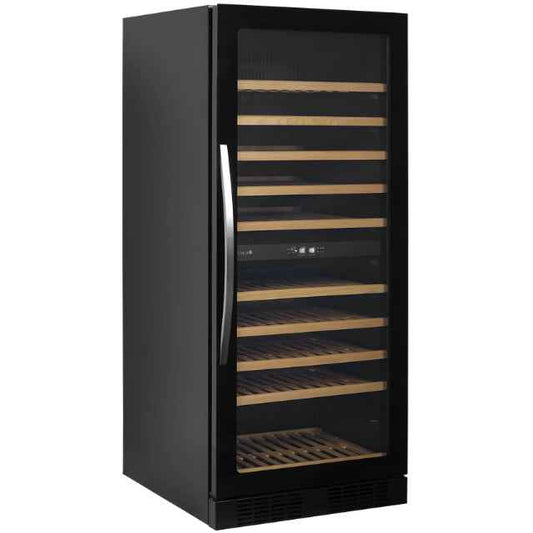
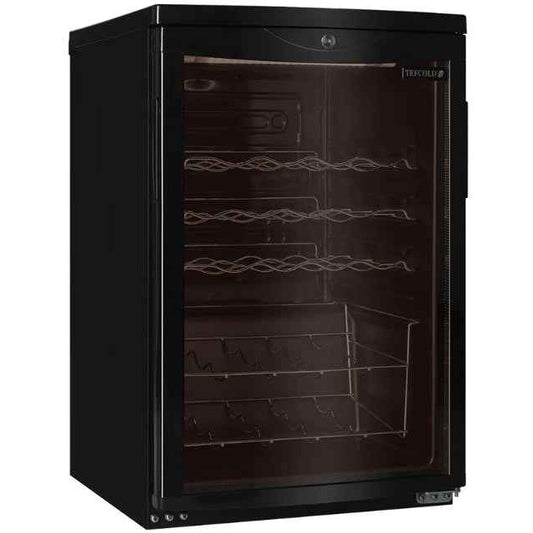
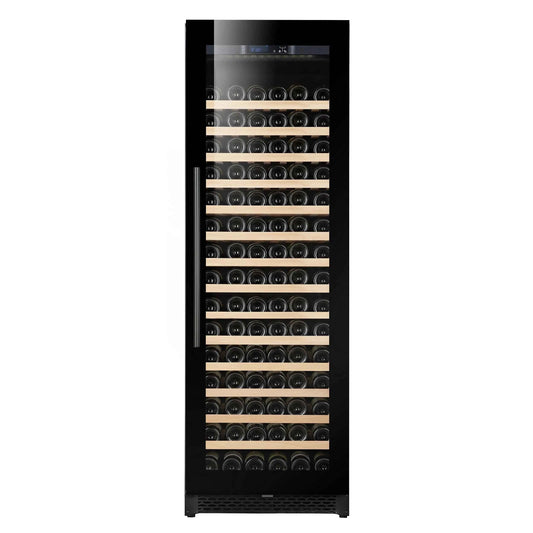
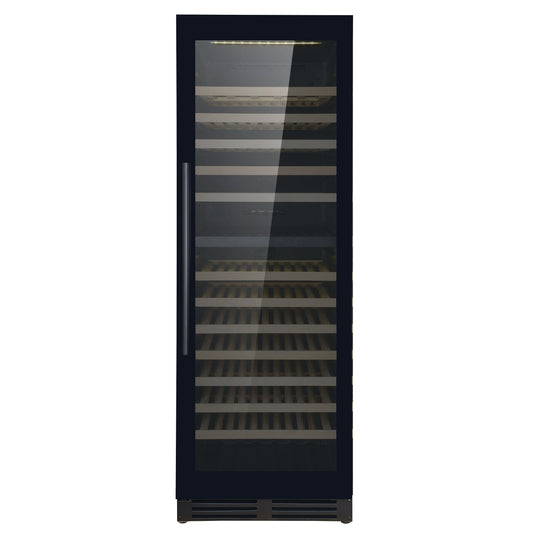
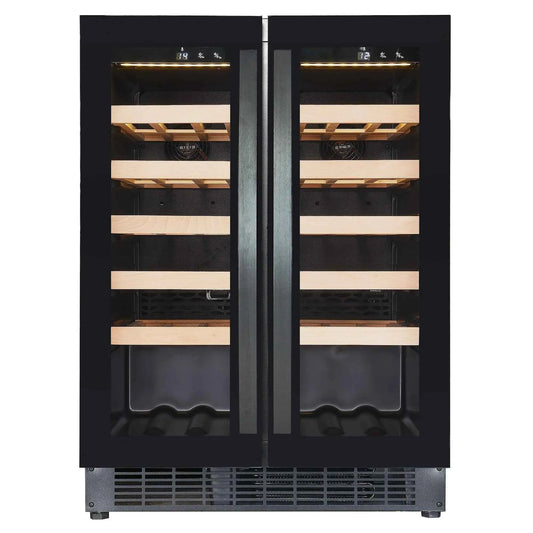
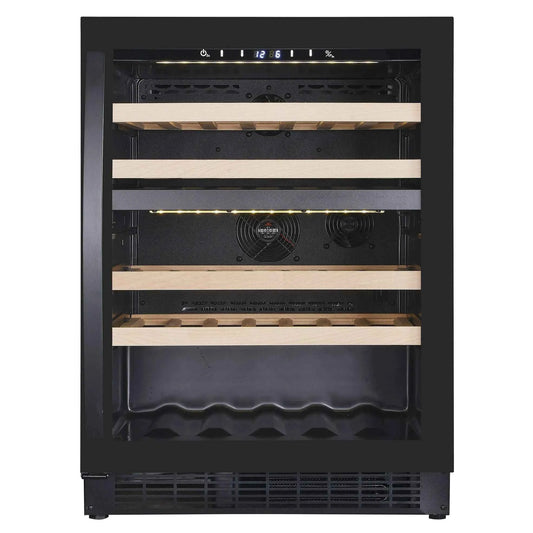
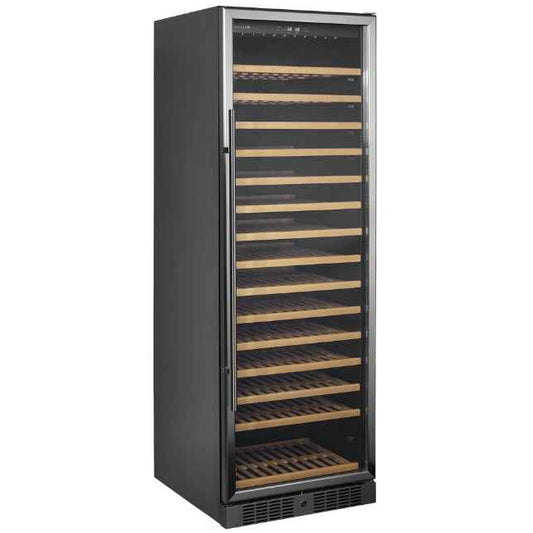
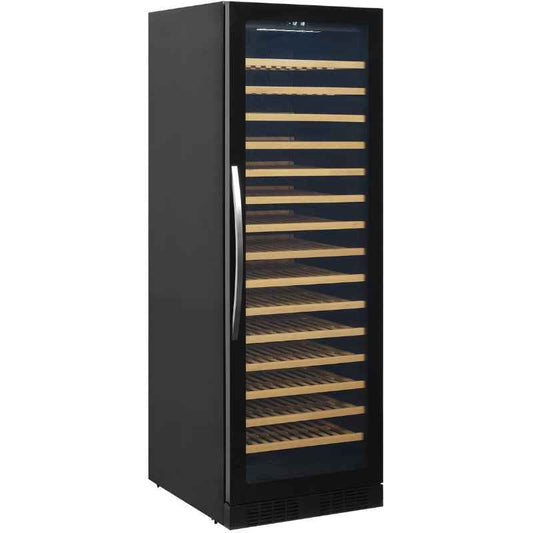
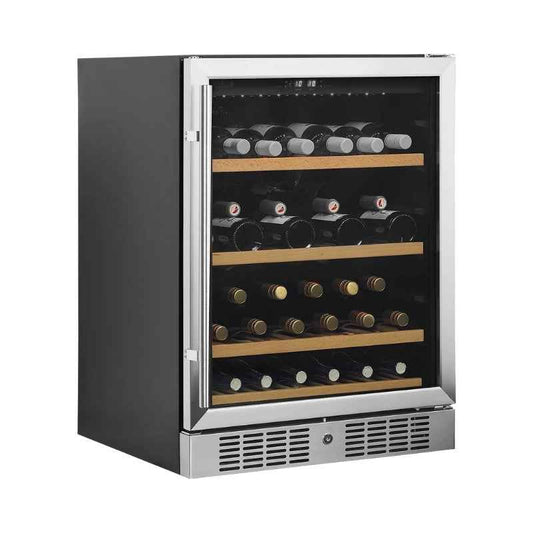
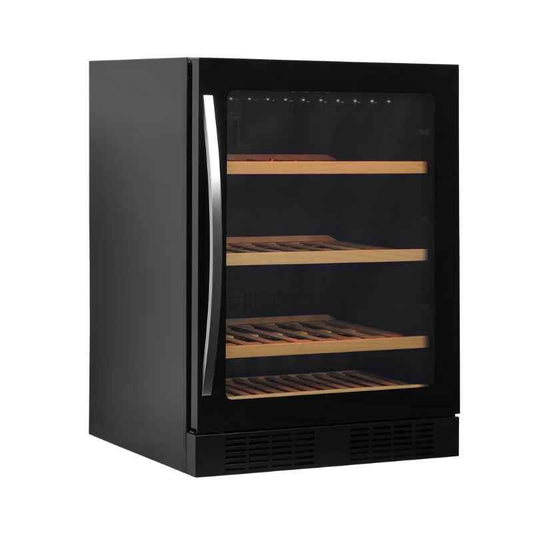
Commercial wine fridges in this range run from 39-bottle undercounter units suitable for a bar counter to 165-bottle freestanding cabinets for restaurants and wine merchants. If you're storing wine for a dining room or cellar, a high-capacity freestanding model works well and gives you room to grow your list without running out of space within a year. If you need chilled-to-serve wine accessible during service, an undercounter unit positioned at the bar is more practical, keeping bottles within arm's reach of front-of-house staff. Some operators use a combination: bulk storage at cellar temperature in the back, with a smaller service unit at the bar set to serving temperature — this two-tier approach is common in venues with a serious wine list, since it avoids constantly opening the main storage unit during service.

Installation and ventilation for commercial settings

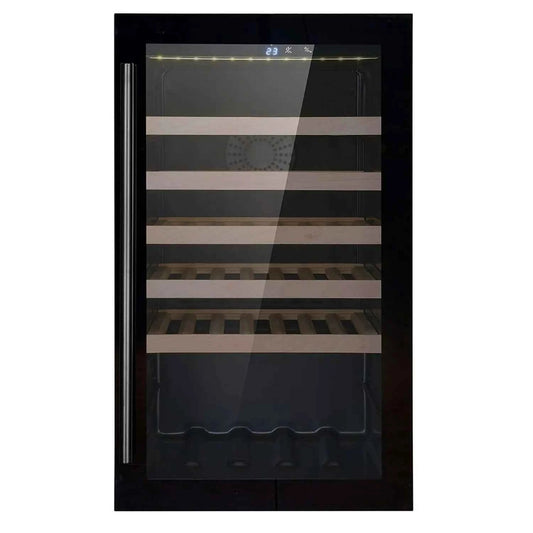
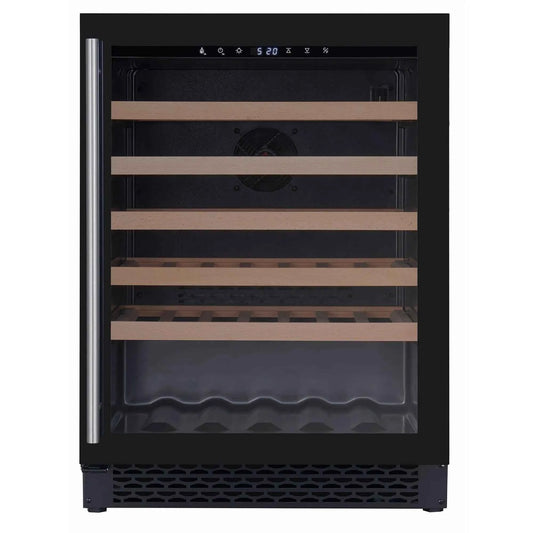
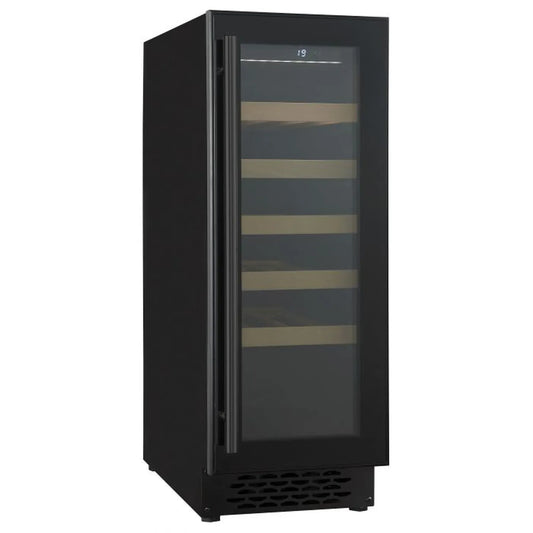
Undercounter and built-in commercial units typically use front ventilation, so they can be boxed into a bar counter or back-of-house cabinet run without needing rear clearance — useful in kitchens and bars where space behind the unit simply isn't available. Freestanding cabinet models need clearance on the sides and back for the compressor to vent properly; in a commercial kitchen this usually means positioning against an outside wall or in a dedicated storage area rather than wedging it into a tight service corridor. If you're planning the layout for a new fit-out, it's worth deciding on unit positions before final electrical and ventilation plans are signed off, since retrofitting clearance around an already-installed unit is far more disruptive than accounting for it up front.

Temperature for commercial wine storage

For long-term storage, 11–13°C across all styles is the industry standard, replicating cellar conditions regardless of grape variety. For service, whites and sparkling are typically held at 6–10°C and reds at 14–18°C, ready to pour without needing to adjust temperature at the table. A dual zone commercial fridge covers both service temperatures in one cabinet, though many venues prefer separate units for storage and service to keep temperatures consistent and avoid door-opening disruption to the storage zone — every time a storage-zone door opens, the whole cabinet takes time to recover, which matters if you're also relying on it to hold stock at a steady 12°C for months at a time.

Running costs and energy efficiency

Because commercial units run continuously and are opened far more often than a domestic fridge, energy efficiency has a real impact on operating costs over a year rather than being a nice-to-have. Fan-assisted, compressor-cooled models recover faster after each door opening, which in practice means less total compressor run-time over a busy service than a passive model struggling to claw temperature back down. It's worth checking the energy rating alongside capacity when comparing models for a specific site, since a larger unit run continuously in a warm back-of-house area will cost meaningfully more to operate than the same capacity split across a better-ventilated space.

Who are commercial wine fridges for?

Restaurants, bars, hotels, wine merchants, wedding venues, catering companies, and any business that sells or serves wine professionally. A busy gastropub with a rotating by-the-glass list has very different needs from a wine merchant holding stock at cellar temperature for months at a time, and a hotel bar serving guests late into the evening has different noise and access requirements from a back-of-house storage room — the range here is built to cover all of those cases rather than a single generic "commercial" spec.

Warranty and support for trade buyers

Commercial units are generally backed by the same manufacturer warranty terms as their domestic equivalents, though given how much harder these units work, it's worth registering the unit and keeping documentation of installation and servicing in case a warranty claim is ever needed. Because a fault in a commercial unit typically means lost stock or disrupted service rather than just inconvenience, we'd always recommend having a plan for interim storage if a unit does need to go away for repair — particularly for single-unit venues without a second fridge to fall back on. All models include free UK mainland delivery, and our team is happy to advise on the right unit for your setup — call us on 020 3051 9269.

Frequently Asked Questions

What's the difference between a commercial and domestic wine fridge?

Commercial models use more powerful compressors, stronger shelving, better door seals rated for far more open-and-close cycles, and often fan-assisted cooling — built for continuous, heavy daily use rather than occasional domestic access.

What temperature should I store wine at commercially?

11–13°C is the standard for long-term storage across all styles. For service, whites and sparkling run 6–10°C and reds 14–18°C.

Should I get one dual zone unit or separate storage and service fridges?

Many venues prefer separate units — a storage fridge kept at a steady 12°C and a smaller service unit at the bar — since opening a dual zone unit for service disrupts the storage side's temperature.

Do commercial wine fridges need rear ventilation clearance?

Undercounter and built-in models typically vent from the front and can be boxed in; freestanding cabinet models need clearance on the sides and back for the compressor.

Are commercial wine fridges NSF certified?

Many are NSF or equivalent certified for food service hygiene — check the individual product spec if certification is required for your environmental health inspection.

What capacity commercial wine fridge do I need?

Undercounter bar units start around 39 bottles; freestanding cabinets go up to 165 bottles. A good starting point is your current list size plus headroom to grow it over the next year or two.