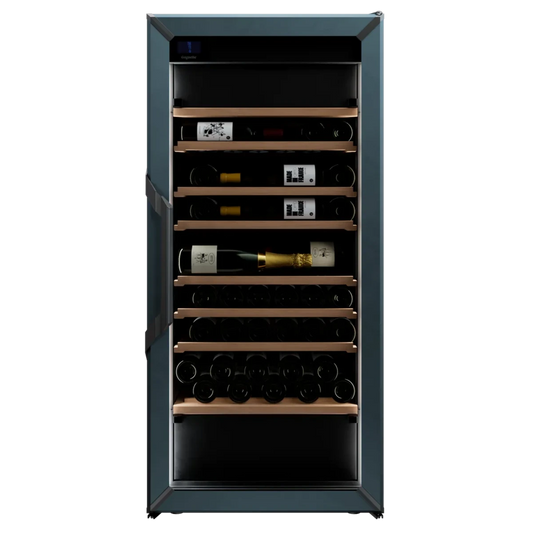
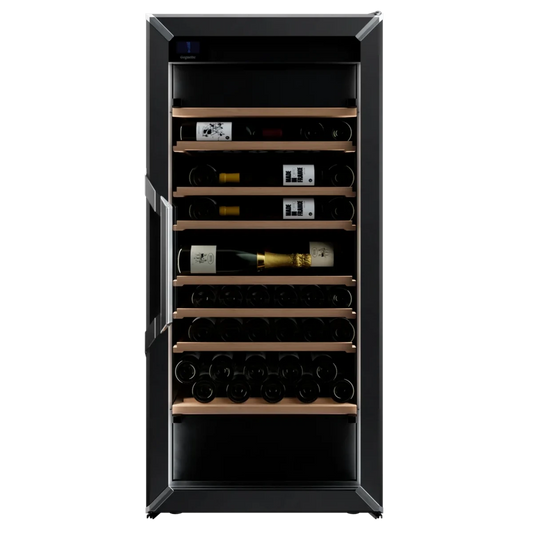
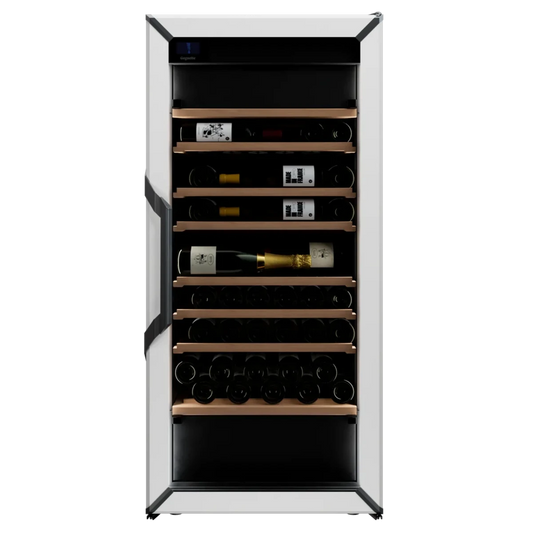
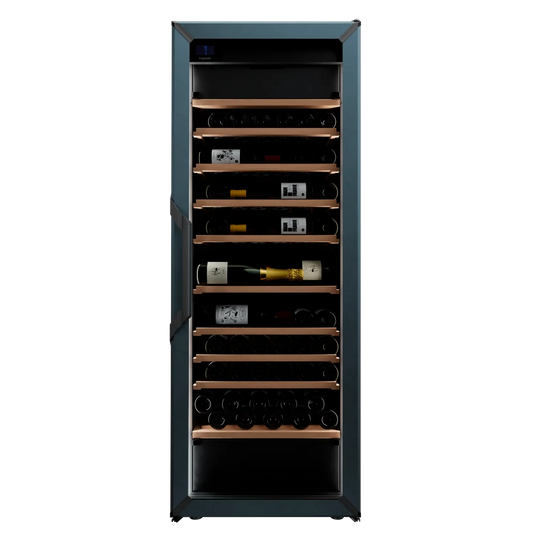
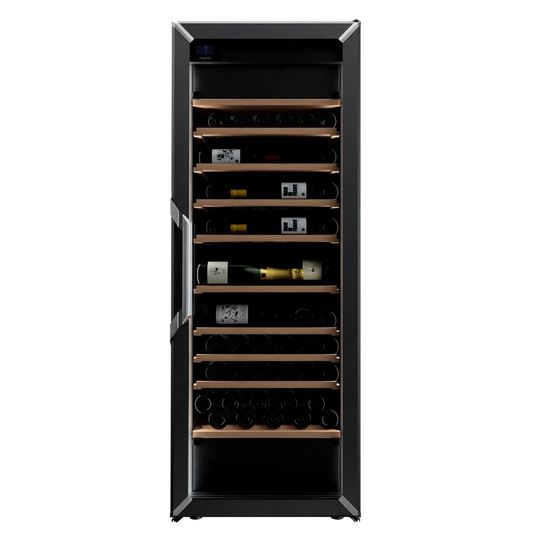
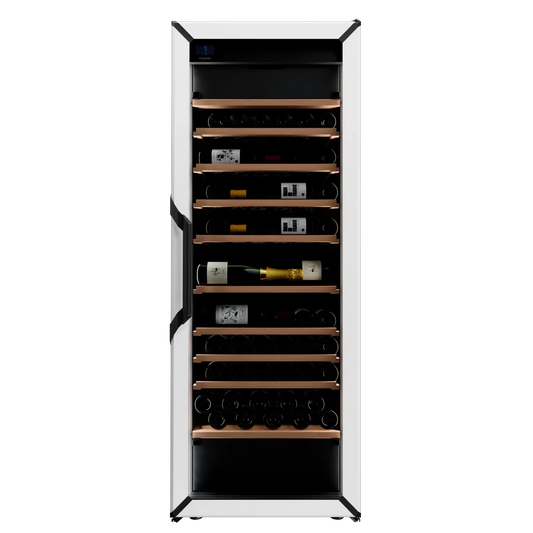
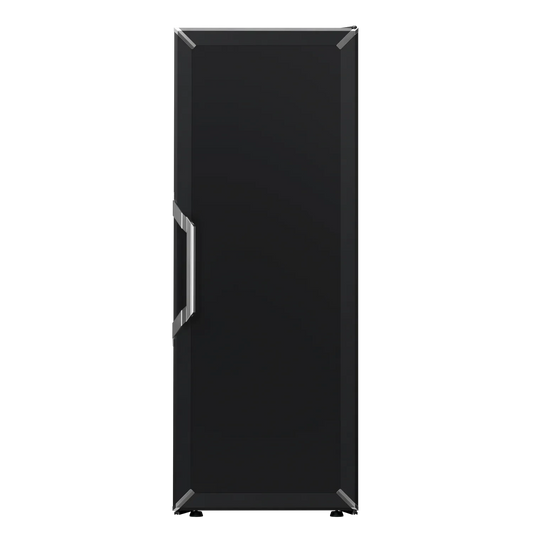
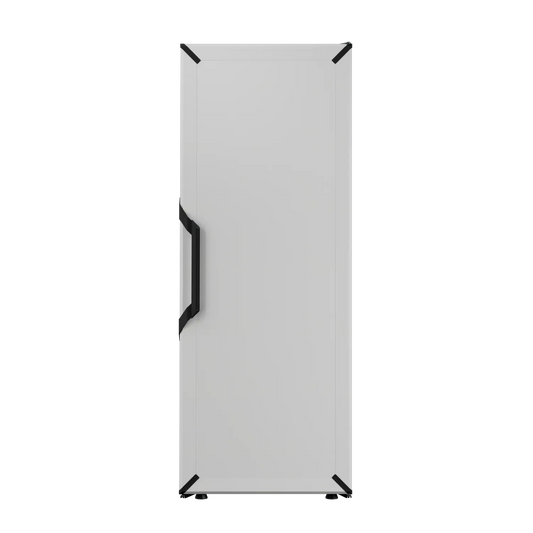
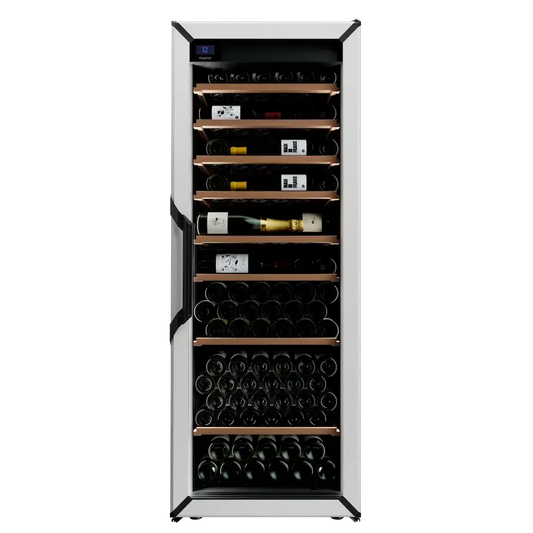
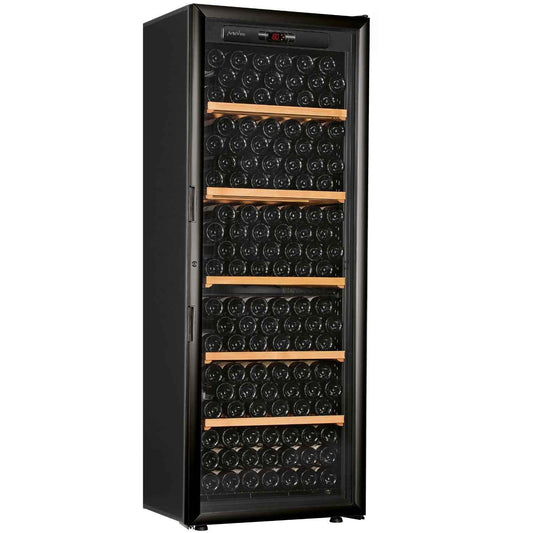
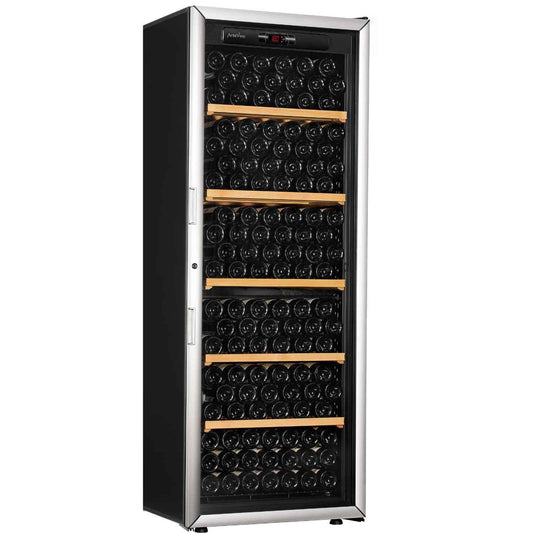
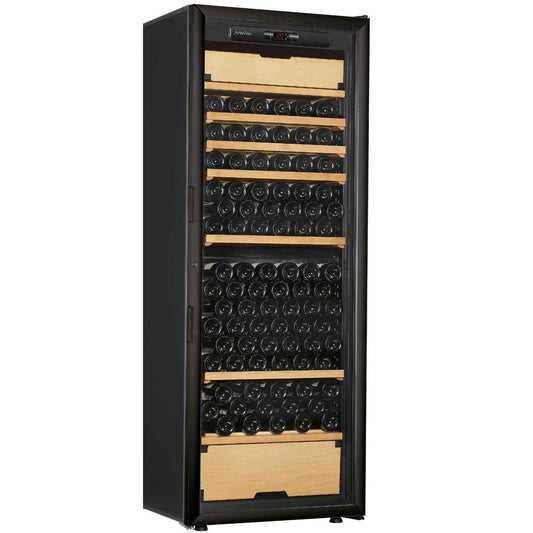
Freestanding Wine Fridges

85 products

Collection: Freestanding Wine Fridges

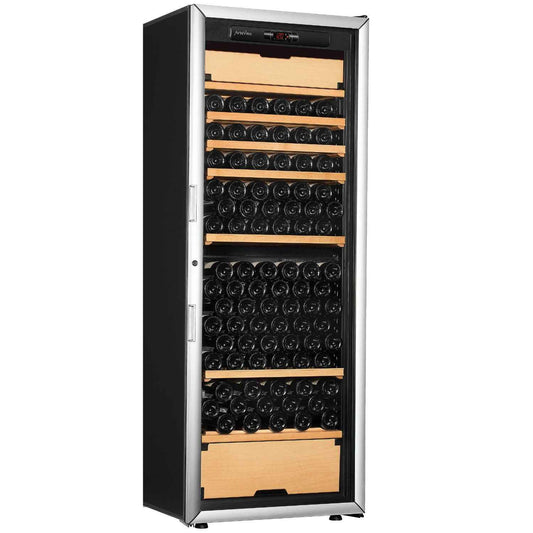
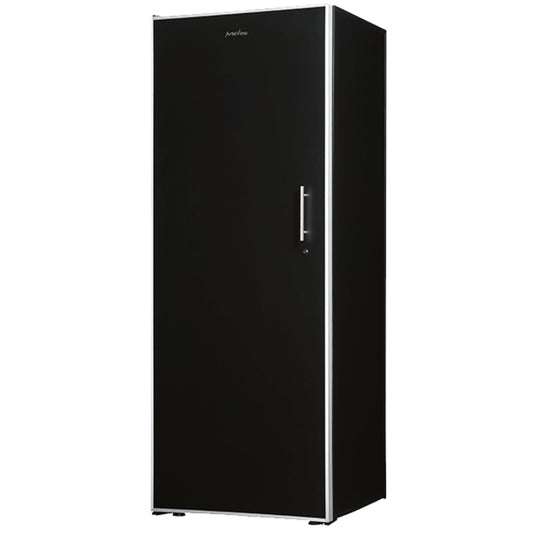
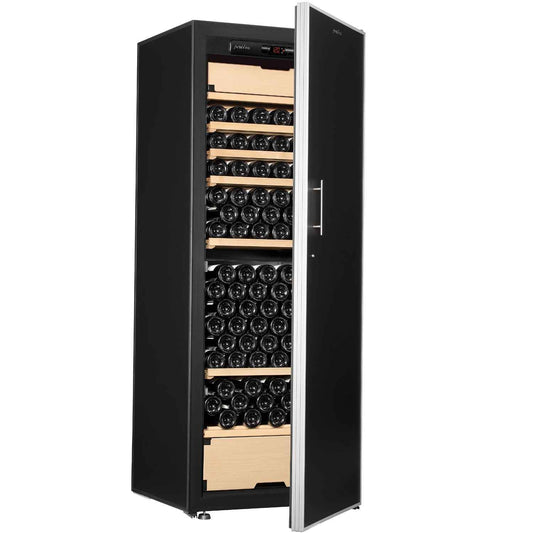
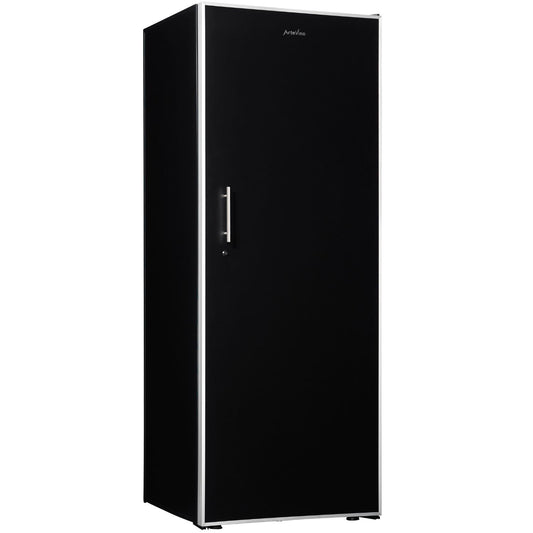
Freestanding wine fridges are the most flexible way to store wine at home. Unlike undercounter or integrated models, they don't need to be built into cabinetry — you can place them anywhere with a nearby plug socket, from a kitchen corner to a dining room alcove, a home bar, or a garage. If you rent, move house regularly, or simply want wine storage without a kitchen renovation, freestanding is the natural choice.

What to look for in a freestanding wine fridge

The key difference between freestanding and built-in wine fridges is ventilation. Freestanding models vent heat from the back and sides, so they need a few centimetres of clearance around them — typically 10–15cm. Never install a freestanding wine fridge into a closed cabinet unless the manufacturer specifically states it supports that configuration, as it will overheat. Beyond that, the same quality indicators apply: look for low noise levels (ideally under 42dB), UV-protected glass, and a consistent thermostat.

For larger freestanding models — those storing 80 bottles or more — consider whether a compressor or thermoelectric cooling system is used. Compressor cooling is more powerful and handles ambient temperature fluctuations better, making it the right choice for rooms that get warm in summer. Thermoelectric systems are near-silent and vibration-free, which is better for delicate collections, but they struggle in rooms above 25°C.

Freestanding vs built-in: how to choose

A built-in or undercounter wine fridge sits flush inside a cabinet run and vents from the front, which is why it needs to be specified before a kitchen is fitted — retrofitting one afterwards usually means losing a cupboard. A freestanding model sidesteps that entirely: it stands wherever there's a socket and a few centimetres of clearance, and it moves with you if you relocate. The trade-off is purely aesthetic and spatial rather than about cooling performance — a freestanding unit isn't a compromise on temperature stability, it just isn't hidden behind a cupboard door. If you're renting, mid-renovation, or simply don't want to commit a cabinet slot to wine storage, freestanding is the more practical starting point.

Choosing the right capacity

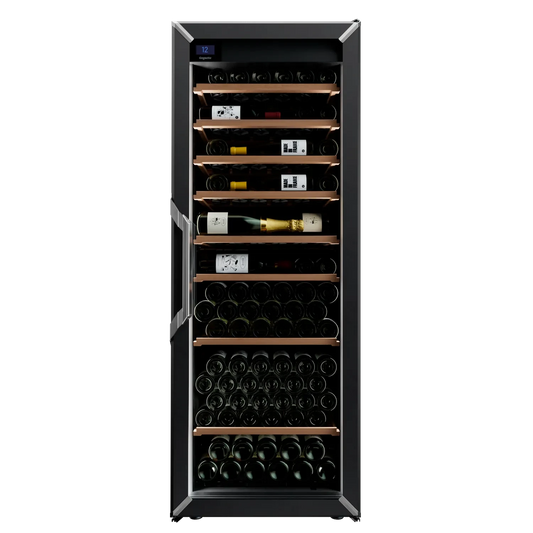
Freestanding wine fridges range from compact 7-bottle countertop units to full-height 165-bottle cabinets. For most households, a 20–50 bottle model covers everyday drinking and a modest cellar. If you entertain regularly or collect seriously, a 60–120 bottle model gives you room to grow. Bear in mind that bottle counts on wine fridges are calculated using standard Bordeaux bottles — Burgundy or Champagne bottles are wider and will reduce effective capacity slightly.

Single zone vs dual zone freestanding

Single zone models maintain one temperature throughout — best if you mainly drink one type of wine or want a simple set-and-forget appliance. Dual zone models split the fridge into two independent temperature areas, so you can keep a red at 14–16°C and a white at 8–10°C at the same time. Most freestanding dual zone fridges in this range place the zones top and bottom rather than left and right, with the cooler zone naturally sitting at the bottom.

Brands and finishes

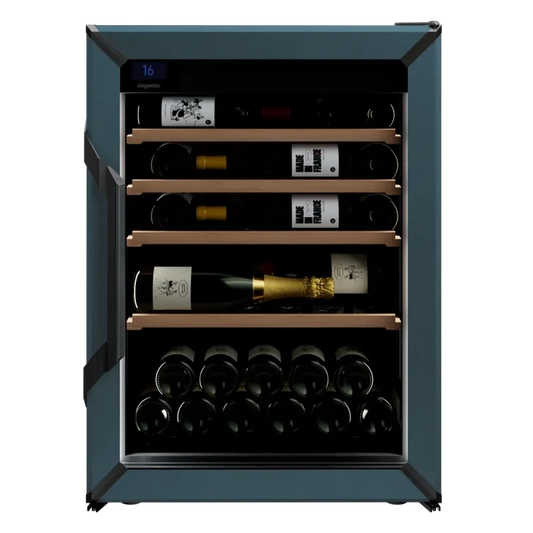
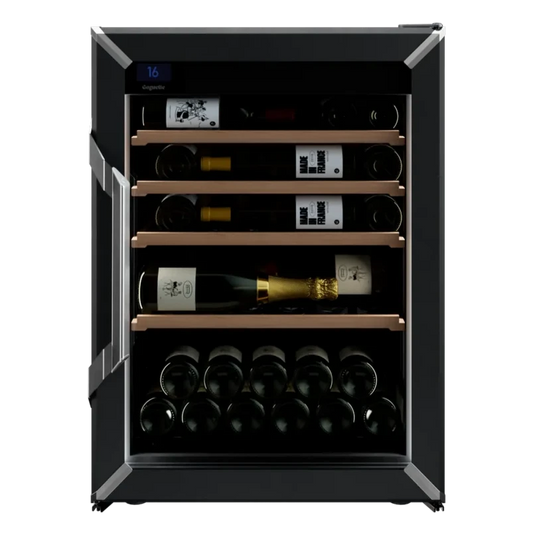
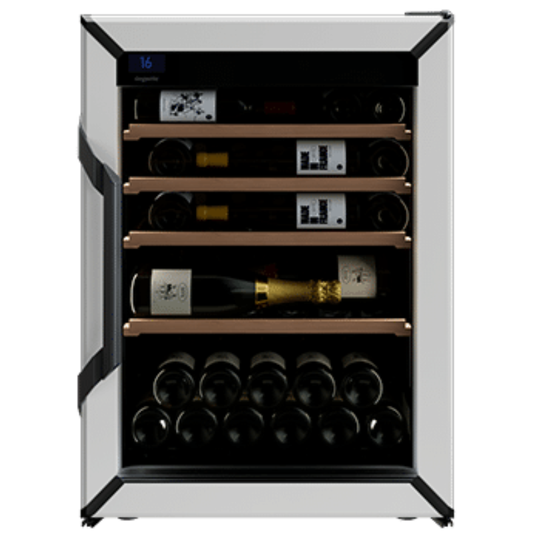
CDA, Matrix and Amica all offer well-priced 30cm and 60cm freestanding models in black or stainless steel finishes, and CDA's Nancy range adds a retro-styled option in a handful of colourways for anyone wanting a freestanding fridge that doubles as a statement piece rather than disappearing into the kitchen. Rangemaster, HOMCOM and Subcold cover the more compact and budget end, while SWISSCAVE, Caso Design and Goguette build larger-capacity freestanding cabinets aimed at serious collectors, several with humidity control and multi-zone options built in.

Running costs

Because freestanding models rely on airflow around the unit rather than an enclosed cabinet, they typically run slightly more efficiently than a built-in model of the same capacity, provided the clearance gaps are respected. Compressor-cooled models cost roughly the same to run as a small standard fridge — a few pounds a month at current electricity prices — and holding a stable temperature rather than cycling on and off aggressively is what keeps that cost down over the appliance's lifetime.

Who are freestanding wine fridges for?

They're ideal for anyone who wants wine properly chilled without committing to a full installation. They're especially popular in rental properties, newly furnished homes, home bars, and as a secondary fridge for guests and entertaining. All models come with free UK mainland delivery.

Frequently Asked Questions

What is a freestanding wine fridge?

A freestanding wine fridge is a standalone unit that isn't built into cabinetry. It vents from the back and sides rather than the front, so it can be placed anywhere with a nearby socket and a little clearance, rather than needing a dedicated cabinet cutout.

How much space does a freestanding wine fridge need around it?

Most freestanding models need roughly 10-15cm of clearance at the back and sides for airflow. Pushing one flush against a wall or into a tight alcove will make it run hotter and less efficiently over time.

Can I build a freestanding wine fridge into a cabinet?

Not unless the manufacturer specifically states the model supports it. Freestanding units vent from the sides and back, so boxing one into a sealed cabinet traps heat and can cause it to overheat and fail early.

Should I choose single zone or dual zone?

Single zone suits anyone mainly drinking one style of wine and wanting a simple, one-temperature appliance. Dual zone lets you hold reds and whites at their own ideal temperatures in the same unit, which suits most households that drink a mix of styles.

What size freestanding wine fridge do I need?

Most households do well with a 20-50 bottle model for everyday drinking and a modest cellar. Regular entertainers or serious collectors tend to size up to 60-120 bottles rather than outgrow a smaller unit within a year.

Are freestanding wine fridges available in stainless steel?

Yes, most freestanding ranges offer both black and stainless steel finishes, including CDA, Matrix and Amica, so you can match existing kitchen appliances either way.